Danny was nineteen when I met him. Sandra's son. Came in to fix a laptop that was "running slow."
YouTube Taught Our Head of IT
Why unofficial experience might be exactly what your business needs
Danny was nineteen when I met him. Sandra's son. Came in to fix a laptop that was "running slow."
He had no qualifications. No certifications. No formal training whatsoever. Everything he knew about computers, he'd learned from YouTube tutorials, online forums, and taking apart his own machines to see what happened.
Two years later, he's our Head of Technical Sales. He speaks at NCSC seminars. Clients specifically request him. He's trained up our IT manager and is mentoring our newest technician.
This is the story of why I hired someone with no credentials - and why it was the best decision I ever made.
The First Fix
That first day, I watched him work. The laptop was ancient, clogged with years of neglect. Most IT people would have told us to bin it and buy new.
Danny sat down, asked a few questions about what we actually used it for, and got to work. Thirty minutes later it was running faster than it had in years. He'd cleared out junk, removed some dodgy software that had been slowing everything down, and adjusted settings I didn't know existed.
When I asked how he knew to do all that, he shrugged. "YouTube, mostly. And just... trying stuff."
I paid him thirty quid and asked if he could come back next time something went wrong.
The YouTube Education
Over the following months, I learned more about how Danny had taught himself.
He'd started at fourteen, trying to fix his own gaming PC. Found tutorials online. Followed them. When something didn't work, he'd search for the error message and find another video explaining what went wrong. Trial and error, thousands of hours of it.
By the time he finished school, he probably had more practical troubleshooting experience than most IT graduates. Not theory - actual hands-on problem solving.
The difference between Danny and someone with a degree wasn't knowledge. It was paper. He had the skills. He just didn't have the certificate to prove it.
Taking the Chance
When the Cyber Essentials certification became urgent, I had a choice. Hire an expensive consultant. Outsource to an IT firm. Or ask Danny if he thought he could figure it out.
He said yes. Then he went home and spent the weekend watching videos about Cyber Essentials, reading documentation, and testing things on his own laptop.
By Monday, he knew more about it than I ever would.
That was the moment I realised what I had. Not just someone who could fix printers. Someone who could learn anything, quickly, if you gave him the chance.
Making It Official
We put Danny on the books. Part-time at first, then full-time as the work grew.
I'll be honest - there was resistance. Not from the team, but from my own assumptions. A voice in my head saying "shouldn't we hire someone proper? Someone with qualifications?"
But every time I thought about replacing Danny with someone "official," I'd remember: the official people wanted hundreds of pounds per day. Danny was here, he was capable, and he actually cared about our business because we'd given him a chance when nobody else would.
We invested in him instead. Paid for his first certification. Then his second. Gave him training opportunities, sent him to conferences, let him learn on the job.
Every pound we spent on Danny's development came back tenfold.
What YouTube Actually Teaches
People dismiss self-taught knowledge. "YouTube University" is usually an insult. But here's what those hours of tutorials actually gave Danny:
Problem-solving instincts. When something doesn't work, he doesn't panic. He searches, reads, tests, iterates. That's not taught in classrooms. That's learned by breaking things and fixing them, over and over.
Current knowledge. Formal education is always slightly behind. YouTube tutorials often cover the latest tools, the newest approaches. Danny knew about security threats that textbooks hadn't caught up with yet.
Communication skills. He'd learned from people explaining complex things simply. When Danny explains something to Kev, it makes sense. No jargon. No condescension. Just clear, human language.
Resourcefulness. He knows he doesn't know everything. But he knows how to find out. Give him a problem he's never seen, and within an hour he's found three tutorials, two forum threads, and a blog post about it.
The Transformation
Danny at nineteen: messy hair, hoodie, headphones permanently around his neck, calling me "Mr S" even when I told him not to.
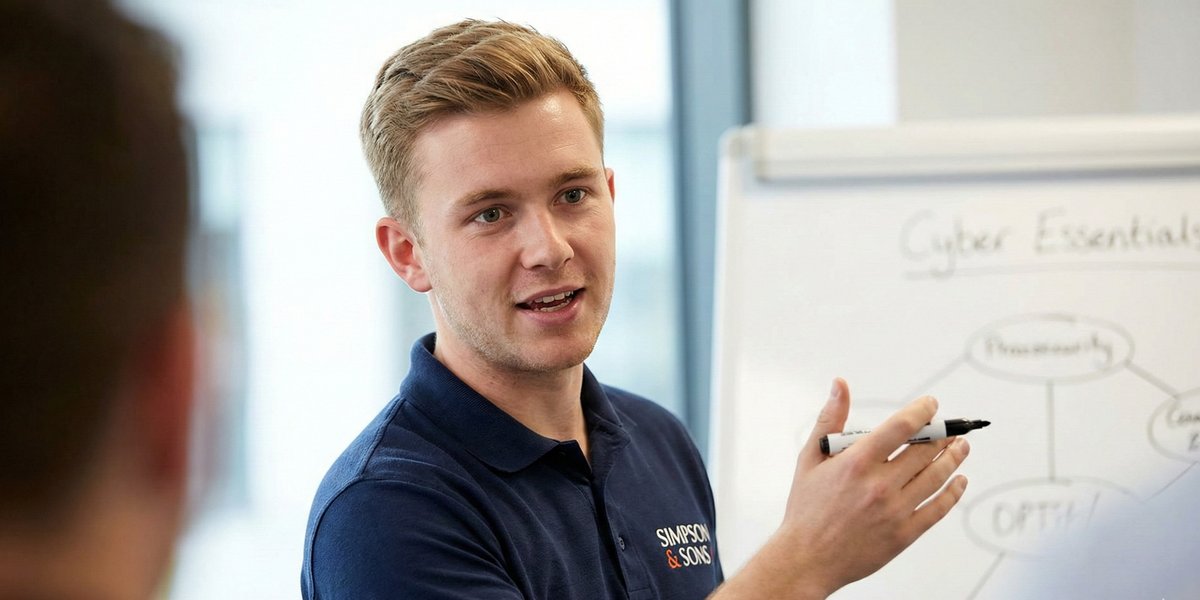
Danny at twenty-one: presenting to rooms full of professionals, closing sales calls, training our new staff, advising businesses ten times our size.
Same person. Same brain. Same YouTube education.
The difference? Opportunity. Someone willing to take a chance on potential rather than credentials.
Finding Your Danny
They're everywhere. The kid who fixes phones for friends. The nephew who "sorted out" the family computer. The school-leaver who couldn't afford university but spends every evening learning online.
Most businesses overlook them because they don't have the right letters after their name. That's a mistake.
Here's what I'd suggest:
Give them a test project. Something small, contained, low-risk. See how they approach it. Watch if they ask questions. Notice if they research before attempting.
Value curiosity over credentials. Someone who's taught themselves is someone who knows how to learn. That's more valuable than a certificate.
Invest in their growth. If they prove themselves, fund their development. Certifications, training, conferences. Turn their unofficial knowledge into official recognition.
Be patient. They might not present like a polished professional at first. Danny certainly didn't. Look past the hoodie and the awkwardness. Look at the capability.
The Return on Investment
Let me be specific about what Danny has brought to Simpson & Sons:
He got us through Cyber Essentials certification when I didn't know where to start.
He built relationships with clients who now specifically request him.
He speaks at industry events, putting our name in rooms we'd never have accessed otherwise.
He trained Priya, who now runs our internal IT.
He's closing deals that have transformed our revenue.
All from the lad who used to come round to fix the laptops when they "went funny."
What I'd Tell My Past Self
If I could go back to that first day - Danny sitting at the slow laptop, me wondering if I should just call a "real" IT company - I'd say this:
Trust your instincts. The formal qualifications are just proof that someone learned something once. This kid in front of you learns something new every day, for fun, because he's curious.
That's rarer than a certificate. That's more valuable than a degree.
Take the chance.
Danny Now
He still watches YouTube tutorials. Still reads forums. Still takes things apart to see how they work.
The difference is, now he sometimes makes the tutorials. Passes on what he's learned. Becomes the resource that the next generation of self-taught IT people will find at 2am when something's broken and they need to figure it out.
The cycle continues.
Jim Simpson is an SME Cyber Resilience Consultant with TransCrypt. Danny has asked us to note that he does have proper certifications now, thank you very much. We've noted it. We're still calling it YouTube University.
Ready to streamline your compliance?
Join hundreds of fast-growing fintechs building with Transcrypt today.
Join the WaitlistAbout the Author
"We are building the operating system for compliance. Transcrypt removes the ambiguity from regulatory frameworks, turning them into deterministic, executable code."