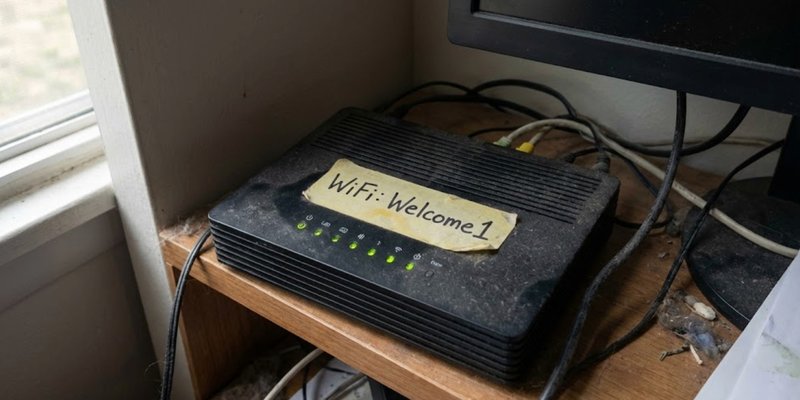
Three weeks ago, I'd never heard of Cyber Essentials. Today, it's the reason I might actually land the biggest contract my business has ever seen.
What the Hell is Cyber Essentials and Why Does My Business Need It?
A small business owner's honest guide to the certification that nearly broke my brain
Three weeks ago, I'd never heard of Cyber Essentials. Today, it's the reason I might actually land the biggest contract my business has ever seen. Let me explain how I got from "cyber what?" to "oh, that's actually not as scary as I thought."
The wake-up call
I run a small business. Proper small. Three laptops, a team I can count on one hand, and an IT setup that consists mainly of Sandra's son Danny coming round when the printer starts making that noise again.
We've been ticking along for years like this. Surviving. Sometimes even thriving, back when times were better. Then I spotted a government contract that was absolutely perfect for us. Right in our wheelhouse. The kind of opportunity that could take us from "keeping the lights on" to actually breathing again.
I read through the requirements, nodding along. Yes, we can do that. Yes, we've got that covered. And then I hit a wall: "Suppliers must hold current Cyber Essentials certification."
My first thought, and I'm not proud of this, was: "Can I just... skip that bit?"
You can't skip that bit.
So what actually is it?
Cyber Essentials is a government-backed certification scheme that proves your business has the basic technical controls in place to protect against common cyber threats. Think of it as your MOT for digital security. It doesn't mean you're Fort Knox, but it means you've got locks on the doors and you remember to use them.
There are two levels. Cyber Essentials is a self-assessment where you answer questions about how your business handles security. Cyber Essentials Plus includes all of that, but someone actually comes and tests your systems to make sure you're not telling porkies.
For most small businesses starting out, the basic Cyber Essentials certification is enough. That's what most contracts ask for, and that's what I'm working towards.
Why do I need it?
Here's what nobody told me until I was already panicking at midnight: this isn't just bureaucratic box-ticking. There are actual reasons this exists.
Government contracts require it. If you want to bid for public sector work involving sensitive information, you'll need Cyber Essentials. Full stop. That's what caught me out, and I'm betting it's caught out plenty of others too.
Bigger companies are asking for it. It's not just government anymore. Large private firms are increasingly checking their supply chain's cyber credentials. If you're subcontracting or supplying to bigger fish, expect the question to come up.
It actually protects your business. I know, I know. When you're worried about payroll and keeping customers happy, "cyber security" feels like something that happens to other people. But here's the thing: small businesses are targets precisely because we often don't have protections in place. A ransomware attack or data breach could finish us off entirely. The certification process forces you to sort out the basics.
Insurance and peace of mind. Some cyber insurance policies are cheaper if you're certified. And honestly? Going through the process has helped me sleep better. I now know where our vulnerabilities are instead of just vaguely hoping we'll be fine.
But I'm tiny. Do I really need this?
I asked myself the same question. We're not exactly handling state secrets here. But the uncomfortable truth is that cyber criminals aren't just going after the big boys. Small businesses are easy pickings because we assume we're too small to bother with.
Plus, and this is the bit that got me, it doesn't matter how small you are if the contract you want requires it. You're either certified or you're not. And if you're not, you're watching that opportunity go to someone who is.
Is it difficult?
I won't lie to you. When I first looked into it, I felt completely out of my depth. The terminology alone made my head spin. Firewalls. Malware protection. Security update management. Access controls. I'm a business owner, not an IT specialist.
But here's what I've learned: it's designed to be achievable. The questions are about practical stuff. Do you use passwords? Do you keep software updated? Do you control who has access to what? It's less "explain quantum encryption" and more "have you got the basics covered?"
There are services out there, good ones, that guide you through step by step. Some are surprisingly affordable. Twenty quid a month affordable, in some cases. The technology does the heavy lifting; you just need to be honest about where you're starting from and willing to make some changes.
My advice?
Start now. Don't wait until you're staring at a tender deadline with a sinking feeling in your stomach like I was. Get ahead of it.
Find a certification body that speaks human. If their website makes you feel stupid, move on. There are plenty who understand that not everyone has an IT department.
Be honest in your assessment. There's no point cheating your way to a certificate if your systems are actually vulnerable. This is about protecting your business, not just getting a badge.
And remember: if I can do this, with my three laptops and my "IT support" who learned everything from YouTube, you can too.
This blog post was written by an actual small business owner who is currently going through the Cyber Essentials process. The tea has gone cold at least twice during the writing of this article.
Ready to streamline your compliance?
Join hundreds of fast-growing fintechs building with Transcrypt today.
Join the WaitlistAbout the Author
"We are building the operating system for compliance. Transcrypt removes the ambiguity from regulatory frameworks, turning them into deterministic, executable code."