Empowerment and call to action
Excerpt: I used to think being small made us vulnerable. It does. But it also makes us fast, adaptable, and capable of change the big players can only dream of.
Small Is Your Advantage
What three years of cyber security taught me about the power of being little
I remember the exact moment I decided we were doomed.
Sitting in my office, reading about cyber attacks on small businesses. The statistics. The horror stories. The ransomware demands that bankrupted companies overnight. The data breaches that destroyed reputations built over decades.
Every article said the same thing: small businesses are targets. We don't have the defences. We don't have the budgets. We don't have the expertise. We're sitting ducks.
I closed my laptop and thought: what's the point? We're too small to afford proper security. We're too small to matter to the people who could help us. We're just... too small.
I was wrong.
Not about being targets. We are. But about everything else.
The Myth of "Too Small"
Here's what the scary articles don't tell you: being small isn't just a vulnerability. It's a superpower.
Large companies take years to implement security changes. They have committees, approval processes, legacy systems, thousands of employees to retrain, and politics at every level. I've seen enterprise security projects that took eighteen months just to get through procurement.
We did our entire Cyber Essentials certification in six weeks.
Six weeks from "what's a firewall?" to certificate on the wall.
That's not because we cut corners. It's because when I decided something needed to change, it changed. No committees. No approval chains. No waiting for budget cycles. Just decision, action, result.
That's the power of small.
They Target Us Because We're Easy
Let's be honest about the threat first.
Cybercriminals target small businesses because we're often unprotected. We're the houses with the doors unlocked while the mansions have security systems. Why bother attacking a fortress when the cottage next door is wide open?
The statistics are real:
- Small businesses are hit by nearly half of all cyber attacks
- The average cost of a breach can be catastrophic for a small firm
- Many small businesses that suffer serious attacks don't survive
I'm not going to pretend these facts away. They're true. They're scary. They should motivate action.
But here's what those same statistics don't tell you: the attacks succeed because of basic failures. Weak passwords. Unpatched software. Untrained staff. The fundamentals.
And fundamentals are exactly what small businesses can fix fast.
The Advantages Nobody Talks About
Speed of decision-making.
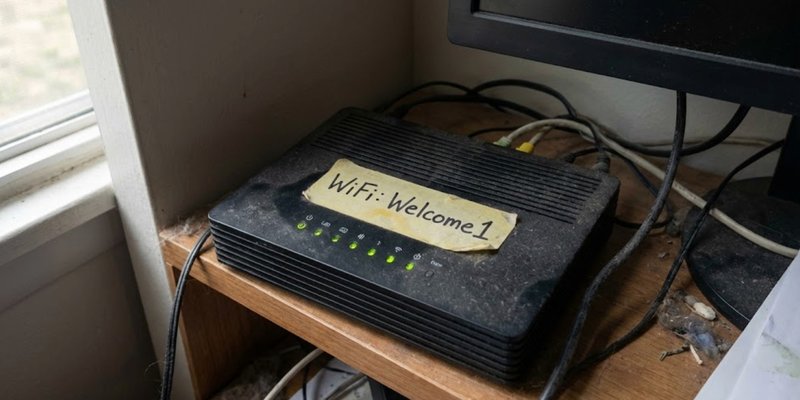
When Danny told me our WiFi password was a security disaster, I changed it that day. When we realised we needed a password manager, we had one installed across all devices within a week.
Try doing that in a company with 500 employees. You'd still be writing the proposal.
Simplicity of systems.
We had three laptops, one server, and a router. That's it. Our entire "IT infrastructure" could be audited in an afternoon.
Large companies have systems they don't even know about. Legacy applications nobody remembers installing. Shadow IT that's never been assessed. Complexity is the enemy of security.
Our simplicity was our strength.
Personal relationships.
I know everyone who works here. I've met their families. When I explained why security mattered - really explained, with the stakes for their jobs and our business - they listened. Because they trust me. Because we're in this together.
Try getting that level of buy-in at a company where the CEO is a face on a poster and security policies come from "corporate."
Flexibility to adapt.
When something didn't work, we changed it. Our first password policy was too complicated - people were writing things down again. So we simplified it. Problem identified on Tuesday, solution implemented by Thursday.
Agility isn't just a buzzword. It's survival.
What "Protection" Actually Looks Like
Here's the secret that took me three years to learn: protecting a small business isn't about buying expensive things. It's about doing simple things consistently.
Passwords: Strong, unique, managed properly. Cost: less than a tenner per person per month for a password manager. Time to implement: one week.
Updates: Keep software current. Cost: nothing but time. Time to implement: ongoing, but maybe an hour per week across the business.
Training: Make sure your people can spot threats. Cost: free resources from NCSC, or cheap online courses. Time to implement: a few hours initially, then quarterly refreshers.
Backups: Regular, tested, stored separately. Cost: basic cloud backup is about a tenner a month. Time to implement: one afternoon to set up, then it runs automatically.
Certification: Cyber Essentials proves you've got the basics right. Cost: a few hundred pounds. Time to implement: six weeks if you're starting from scratch.
None of this requires an IT department. None of it requires a massive budget. None of it requires expertise you don't have.
It just requires deciding to do it.
The Turn
I remember the exact moment it shifted for me.
We'd just passed our Cyber Essentials assessment. Six weeks of work, stress, biscuits, and arguments about passwords. I was exhausted.
But I also felt something I hadn't felt in years: in control.
For the first time, I actually understood our security. I knew what our risks were and what we'd done to address them. I could explain our defences to a client, an insurer, a regulator.
We weren't sitting ducks anymore. We'd done something about it.
And because we were small, we'd done it fast.
What I'd Tell Past Me
If I could go back to that moment - laptop closed, convinced we were doomed - I'd say this:
You're right to be scared. Use it. Fear is appropriate. The threats are real. But fear should drive action, not paralysis.
Stop comparing yourself to big companies. Their security isn't your security. Their challenges aren't your challenges. Their timeline isn't your timeline.
Your size is an asset. You can move faster than they can. You can change more easily than they can. You can build a security culture in weeks that takes them years.
Start with the basics. You don't need to boil the ocean. Passwords. Updates. Backups. Training. Get those right and you're ahead of most of your peers.
Find your Danny. Someone who can help you understand this stuff. Someone who speaks human. They're out there. They might already be in your orbit.
It's not as hard as it looks. The jargon makes it seem impossible. It isn't. If I can learn this - me, with my three laptops and my "Welcome1" WiFi password - anyone can.
Where We Are Now
Three years on from that moment of doom.
We have government contracts. Private sector clients who specifically chose us because of our security posture. An actual IT department - grown from Danny and his YouTube education.
I consult for other businesses now. Help them through the same journey I took. Speak at events about small business security.
And it all started with deciding that "too small" was a lie.
Small Is Your Advantage
You're not too small to be hacked. That's true. The criminals know you're there, and they know you're often undefended.
But you're not too small to fight back. You're not too small to change. You're not too small to win.
You're small. That means you're fast. That means you're agile. That means you can go from vulnerable to secure in weeks, not years.
The big companies would kill for that ability. They're stuck in their complexity, their committees, their legacy systems. You're not.
You can decide today to fix your passwords. By next week, it's done.
You can decide today to get certified. In six weeks, you could have the certificate.
You can decide today that "too small" isn't an excuse anymore.
Small isn't your weakness.
Small is your advantage.
Use it.
Jim Simpson is an SME Cyber Resilience Consultant with TransCrypt. He still thinks about that moment with the laptop closed, convinced it was hopeless. He's very glad he was wrong.
Ready to streamline your compliance?
Join hundreds of fast-growing fintechs building with Transcrypt today.
Join the WaitlistAbout the Author
"We are building the operating system for compliance. Transcrypt removes the ambiguity from regulatory frameworks, turning them into deterministic, executable code."